 Image 1 of 1
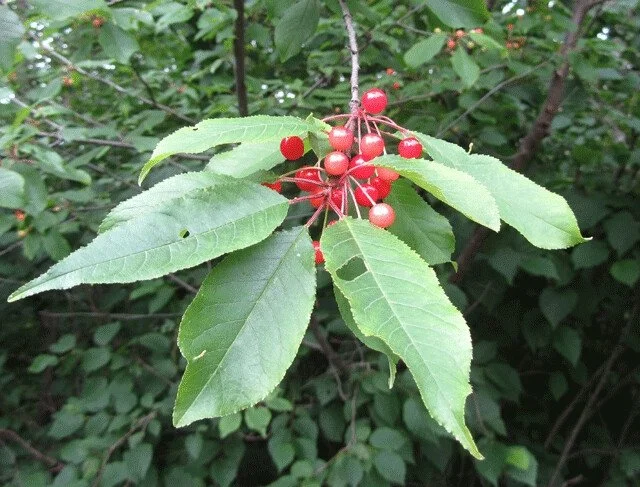
Prunus pensylvanica
(also known as Pin cherry, Fire cherry, Red cherry)
zones 2-5
10 seeds
Bird cherries are closely related to Chokecherries, with a slightly different growth habit. While Chokecherries hold their blooms in racemes, Bird cherries bloom in umbels. The fruit is slightly larger and highly prized for jelly-making. Grows as a small tree (20-35’) at elevations of 6-7,000 feet, and as a shrub at higher altitudes.
NOTE: due to the fragile nature of the seeds, they are shipped in a small box to avoid crushing by postal processing. This results in an increased shipping charge, reflected in the seed cost.
sorry, this product is not available for shipping to Canada
Bird cherries have a high ecological value. Many species of moth and butterfly use its flowers for food and nectar, and larger wildlife consume the fruits.
Pin cherry grows best in cool climates, full sun, and moist, sandy, well-drained soils. It can tolerate alkaline and dry soils, and some drought. Dry open fields and wood-edge clearings are areas where pin cherry trees grow. They are one of the first trees to invade an area after a fire. Pin cherry does not tolerate shade.
Prunus pensylvanica
(also known as Pin cherry, Fire cherry, Red cherry)
zones 2-5
10 seeds
Bird cherries are closely related to Chokecherries, with a slightly different growth habit. While Chokecherries hold their blooms in racemes, Bird cherries bloom in umbels. The fruit is slightly larger and highly prized for jelly-making. Grows as a small tree (20-35’) at elevations of 6-7,000 feet, and as a shrub at higher altitudes.
NOTE: due to the fragile nature of the seeds, they are shipped in a small box to avoid crushing by postal processing. This results in an increased shipping charge, reflected in the seed cost.
sorry, this product is not available for shipping to Canada
Bird cherries have a high ecological value. Many species of moth and butterfly use its flowers for food and nectar, and larger wildlife consume the fruits.
Pin cherry grows best in cool climates, full sun, and moist, sandy, well-drained soils. It can tolerate alkaline and dry soils, and some drought. Dry open fields and wood-edge clearings are areas where pin cherry trees grow. They are one of the first trees to invade an area after a fire. Pin cherry does not tolerate shade.