 Image 1 of 1
Sambucus cerulea
(also known as Blue Elder)
zones 3-6
50 seeds
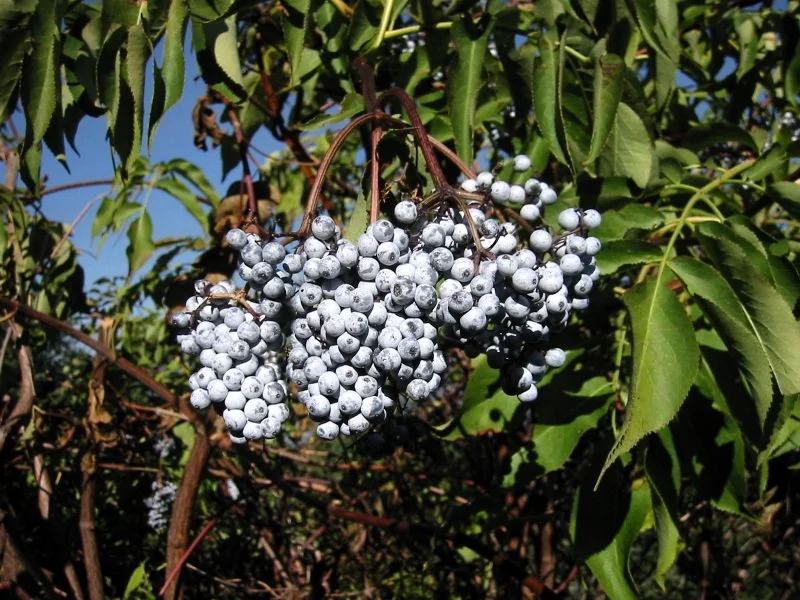
Blue Elderberry has large, flat-topped clusters of small, white flowers that turn into bluish berries. Its size ranges from a small bush to a small tree, depending on elevation and growing conditions.
The berries of Sambucus cerulea are larger than those of Sambucus melanocarpa, thus making them better suited for jams, jellies, and preserves. The berries are otherwise interchangeable.
Seeds should be scarified before planting. They are best sown in the autumn in a cold frame and should germinate in early spring. Stored seed can be sown in the spring in a cold frame but will probably germinate better if it is given 2 months warm followed by 2 months cold stratification first.
Prick out the seedlings into individual pots when they are large enough to handle. If good growth is made, the young plants can be placed in their permanent positions during the early summer. Otherwise, either put them in a sheltered nursery bed, or keep them in their pots in a sheltered position and plant them out in spring of the following year. Blue Elderberry prefers moist soil. The shrubs tolerate strong winds but not maritime exposure.
Sambucus cerulea
(also known as Blue Elder)
zones 3-6
50 seeds
Blue Elderberry has large, flat-topped clusters of small, white flowers that turn into bluish berries. Its size ranges from a small bush to a small tree, depending on elevation and growing conditions.
The berries of Sambucus cerulea are larger than those of Sambucus melanocarpa, thus making them better suited for jams, jellies, and preserves. The berries are otherwise interchangeable.
Seeds should be scarified before planting. They are best sown in the autumn in a cold frame and should germinate in early spring. Stored seed can be sown in the spring in a cold frame but will probably germinate better if it is given 2 months warm followed by 2 months cold stratification first.
Prick out the seedlings into individual pots when they are large enough to handle. If good growth is made, the young plants can be placed in their permanent positions during the early summer. Otherwise, either put them in a sheltered nursery bed, or keep them in their pots in a sheltered position and plant them out in spring of the following year. Blue Elderberry prefers moist soil. The shrubs tolerate strong winds but not maritime exposure.