 Image 1 of 2
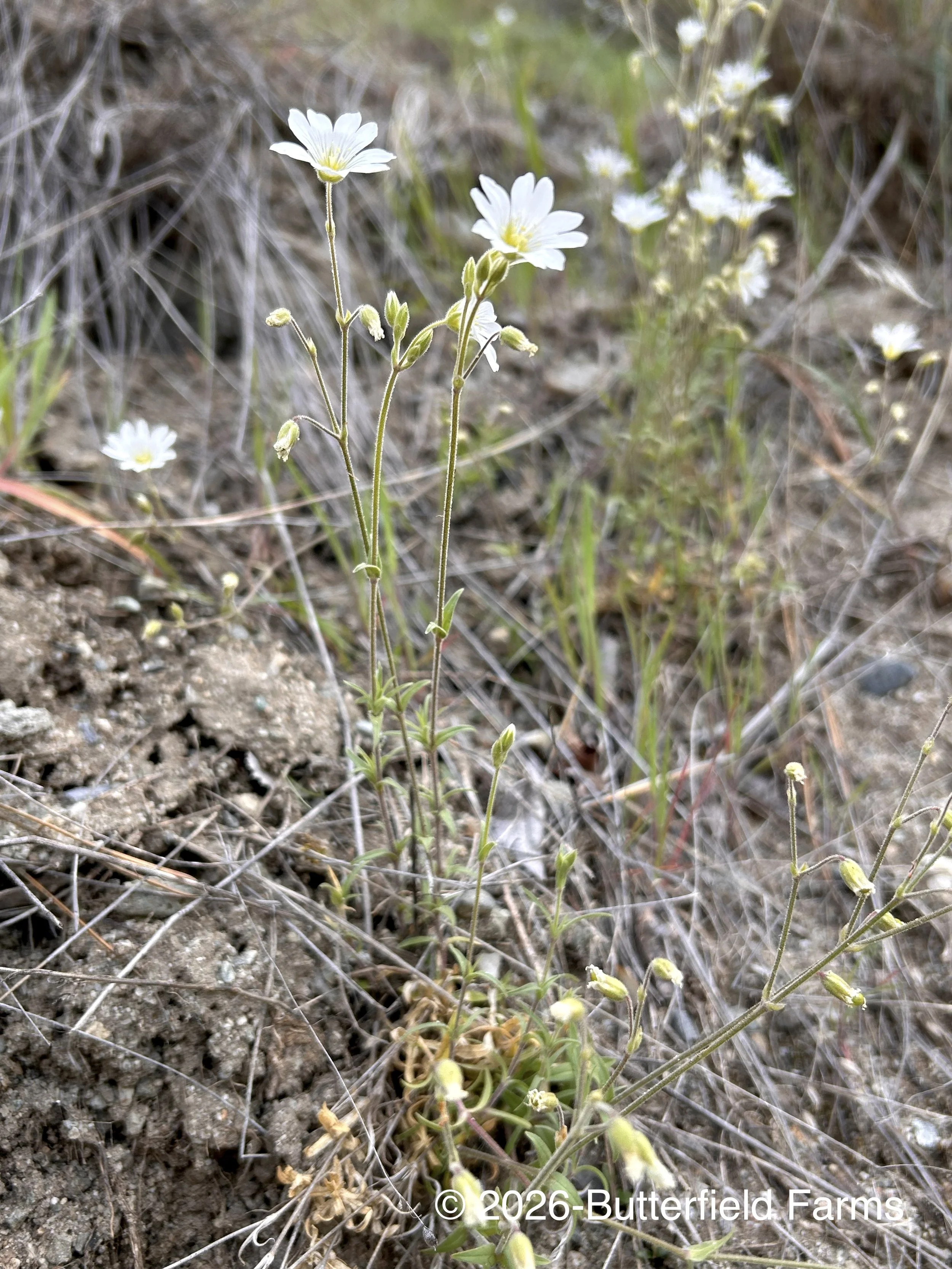 Image 2 of 2
Cerastium arvense
(also known as Meadow chickweed, Mouse ear chickweed)
zones 3-8
30 seeds
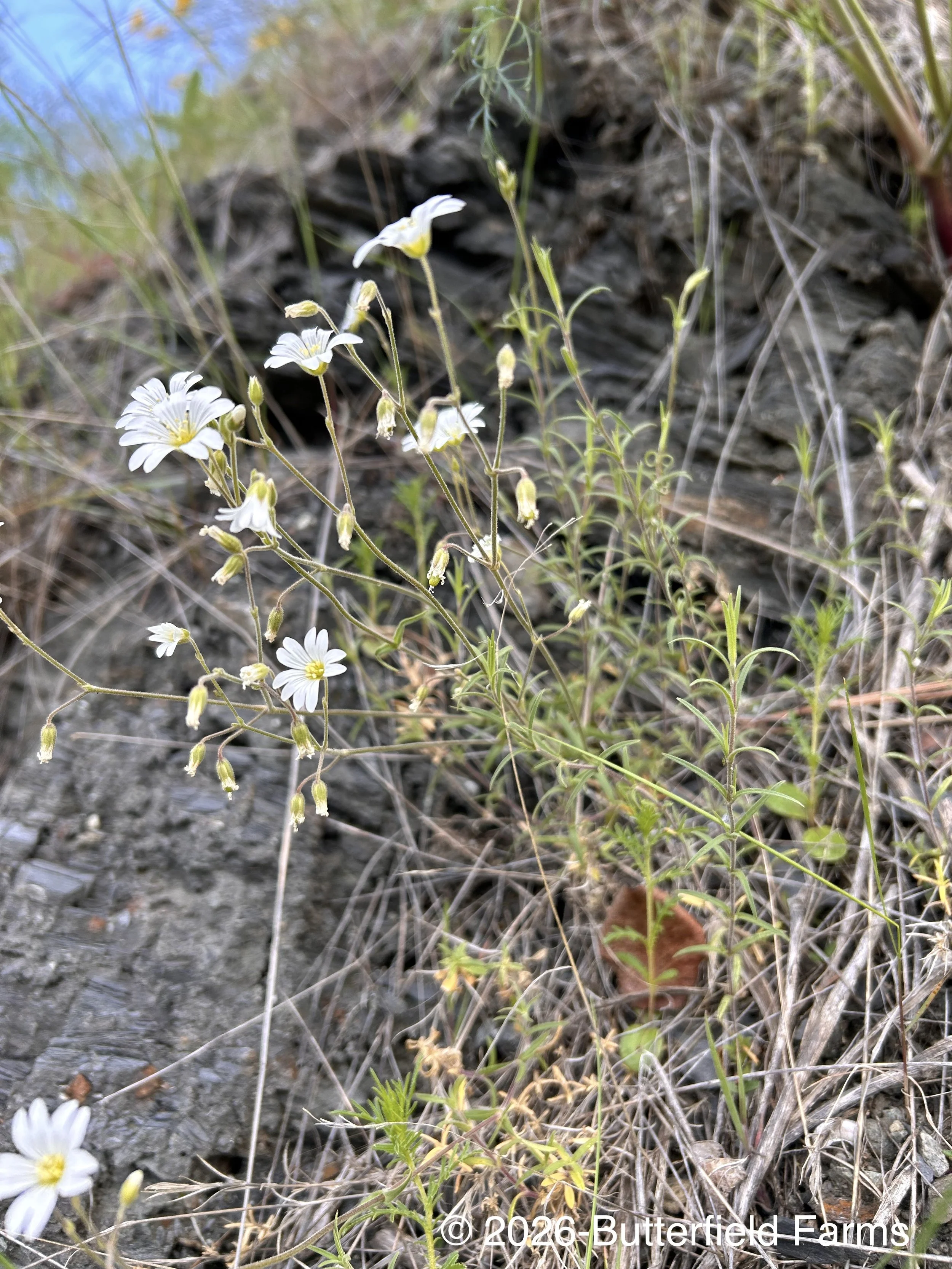
Field Chickweed is a common, widely distributed wildflower found at all elevations through North and South America. Being so widely distributed means that there is considerable variation within the species. For your reference, the photos attached to this listing are from the populations where I gather seed.
Field Chickweed forms perennial clumps or mats up to 12” tall with leafy, trailing stems and is noted for its delicate, deeply notched white flowers that appear in early spring. It can be found on a wide variety of sites and at elevations. The name Cerastium comes from a Greek word meaning “horn”, referring to the shape of its seed capsules.
For those gardeners who get twitchy at the mention of ‘chickweed’ I offer this excerpt from the US Forest Service website:
When you say chickweed, most people think of common chickweed (Stellaria media) or common mouse-ear chickweed (Cerastium fontanum), which were introduced from Europe and now grow in all 50 states. These plants have inconspicuous flowers and are considered weeds by anyone wanting a well manicured lawn. Conversely, field chickweed is a pretty little plant that does not deserve the stigma of being associated with its weedy relatives. It is a native North American plant, grows only in wild habitats, and makes a nice addition to the spring wildflower display throughout much of North America.
To grow, simply scatter seed on prepared soil in fall and allow to overwinter. Plants will self-seed once established.
Cerastium arvense
(also known as Meadow chickweed, Mouse ear chickweed)
zones 3-8
30 seeds
Field Chickweed is a common, widely distributed wildflower found at all elevations through North and South America. Being so widely distributed means that there is considerable variation within the species. For your reference, the photos attached to this listing are from the populations where I gather seed.
Field Chickweed forms perennial clumps or mats up to 12” tall with leafy, trailing stems and is noted for its delicate, deeply notched white flowers that appear in early spring. It can be found on a wide variety of sites and at elevations. The name Cerastium comes from a Greek word meaning “horn”, referring to the shape of its seed capsules.
For those gardeners who get twitchy at the mention of ‘chickweed’ I offer this excerpt from the US Forest Service website:
When you say chickweed, most people think of common chickweed (Stellaria media) or common mouse-ear chickweed (Cerastium fontanum), which were introduced from Europe and now grow in all 50 states. These plants have inconspicuous flowers and are considered weeds by anyone wanting a well manicured lawn. Conversely, field chickweed is a pretty little plant that does not deserve the stigma of being associated with its weedy relatives. It is a native North American plant, grows only in wild habitats, and makes a nice addition to the spring wildflower display throughout much of North America.
To grow, simply scatter seed on prepared soil in fall and allow to overwinter. Plants will self-seed once established.