 Image 1 of 2
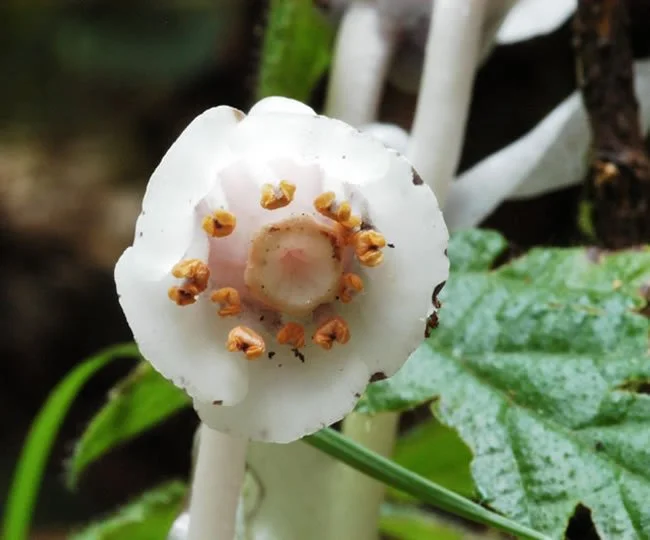 Image 2 of 2
Monotropa uniflora
(also known as Ghost plant, Ghost pipe, American Indian pipe)
zones 3-6
500+ seeds
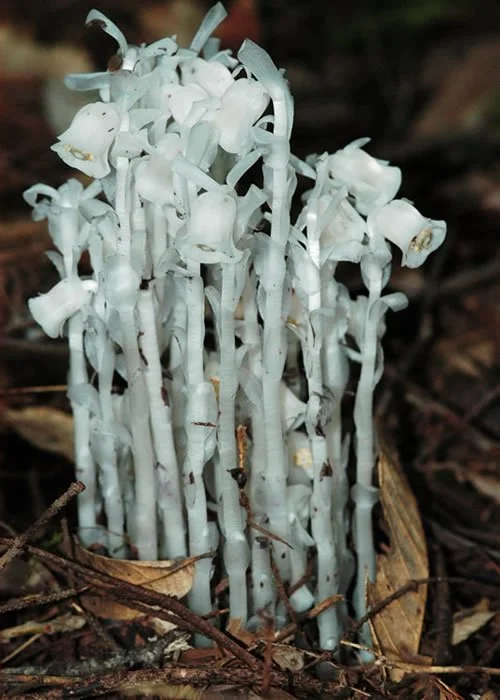
Indian Pipe can be found rising like the ghost of a deceased flower from the forest floor. It has no chlorophyll and does not photosynthesize its own food. Instead, it relies on complex fungal relationships to parasitize other nearby plants for food. Waxy white stems sprout in clumps shortly after a summer rainfall. Each stem grows to 10” and produces a single white flower that nods like a shepherd’s crook. Once the flower has been pollinated, the entire plant and flower turn black.
Indian Pipe is not an orchid, but the seeds require similar treatment and so I offer the following notes on the seed:
A note on orchid seeds: Orchid seed falls into the category known as “dust seeds” because, well, the seeds look like dust. Orchid seeds are notoriously difficult to germinate. Be sure to do your research before attempting them.
The seed I sell here is available in limited quantities because I don’t always find orchids in seed. When I do, I hand gather carefully and selectively from mature plants catching as much of the seed as possible.
These seeds are hard to find in retail markets because the plants are rare and the seeds themselves are difficult to process. I offer them in good faith here to the orchid fans who wish to attempt growing orchids from seed. And I invite you to share your successes with me!
Indian Pipe, like orchids, is notoriously difficult to grow outside of where it chooses to appear. Seeds are tiny and slow to germinate. Growth requirements are highly selective and often depend on specific fungal relationships.
Should you accept the challenge, we recommend mixing the dusty contents of the seed packet with a small amount of sand or sawdust. Sprinkle the seed over an acidic, peaty soil in a promising location (dark, shady, and moist) where the plants will not need to be moved. Germination and growth are slow, so be patient!
Monotropa uniflora
(also known as Ghost plant, Ghost pipe, American Indian pipe)
zones 3-6
500+ seeds
Indian Pipe can be found rising like the ghost of a deceased flower from the forest floor. It has no chlorophyll and does not photosynthesize its own food. Instead, it relies on complex fungal relationships to parasitize other nearby plants for food. Waxy white stems sprout in clumps shortly after a summer rainfall. Each stem grows to 10” and produces a single white flower that nods like a shepherd’s crook. Once the flower has been pollinated, the entire plant and flower turn black.
Indian Pipe is not an orchid, but the seeds require similar treatment and so I offer the following notes on the seed:
A note on orchid seeds: Orchid seed falls into the category known as “dust seeds” because, well, the seeds look like dust. Orchid seeds are notoriously difficult to germinate. Be sure to do your research before attempting them.
The seed I sell here is available in limited quantities because I don’t always find orchids in seed. When I do, I hand gather carefully and selectively from mature plants catching as much of the seed as possible.
These seeds are hard to find in retail markets because the plants are rare and the seeds themselves are difficult to process. I offer them in good faith here to the orchid fans who wish to attempt growing orchids from seed. And I invite you to share your successes with me!
Indian Pipe, like orchids, is notoriously difficult to grow outside of where it chooses to appear. Seeds are tiny and slow to germinate. Growth requirements are highly selective and often depend on specific fungal relationships.
Should you accept the challenge, we recommend mixing the dusty contents of the seed packet with a small amount of sand or sawdust. Sprinkle the seed over an acidic, peaty soil in a promising location (dark, shady, and moist) where the plants will not need to be moved. Germination and growth are slow, so be patient!