 Image 1 of 1
Symphoricarpos oreophilus
zones 3-6
25 seeds
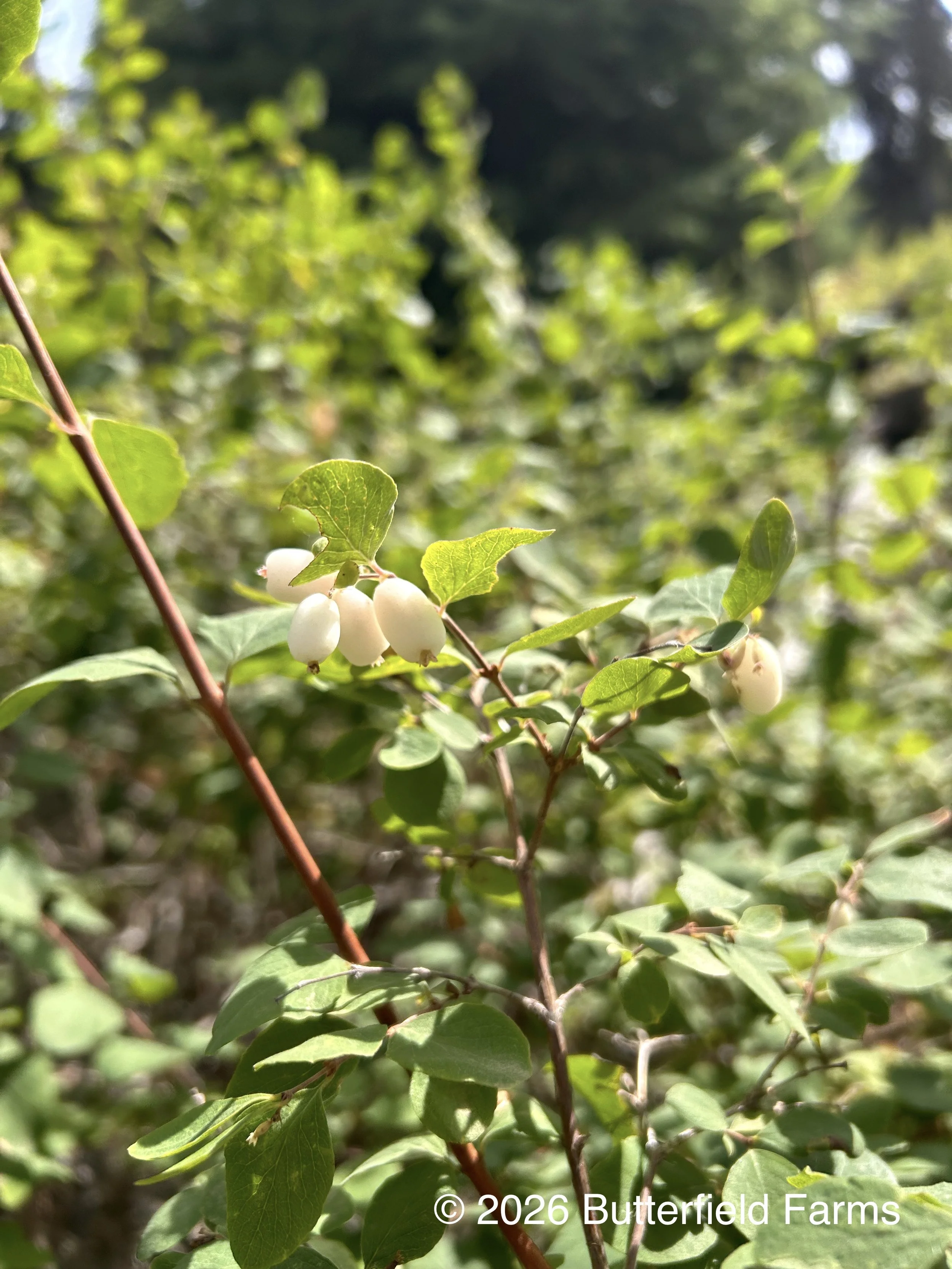
Snowberry is a native, deciduous shrub that is densely branched. There are several varieties found in the Rocky Mountains, and The Mountain Snowberry (Symphoricarpos oreophilus) replaces the Common Snowberry (Symphoricarpos albus) at higher altitudes. It’s commonly found along hiking trails and is easily identified by its soft, blue-green, oval leaves. Shrubs can reach up to 4’ in height, but on riverbanks or other moist places can grow up to 6’.
In late spring the shrubs bear pairs of small, white, trumpet-shaped flowers. The blooms are replaced in late summer by white, waxy berries. There is debate whether the berries are toxic or simply tasteless. To be on the safe side, we recommend not eating the berries. The berries of Mountain Snowberry are smaller and oval-shaped compared to those of the Common Snowberry. In the garden, snowberry will retain its berries even after shedding its leaves, providing loads of winter-interest.
Snowberry seeds are easiest to grow when sown outdoors in September-October. This allows the seed to experience the full warm-then-cold cycle and germinate reliably in the spring. Sow them in place in prepared soil and keep weeded and lightly watered. Seeds may be germinated indoors, but will require extra treatment in order to break dormancy. Tolerates a wide variety of growing conditions.
Symphoricarpos oreophilus
zones 3-6
25 seeds
Snowberry is a native, deciduous shrub that is densely branched. There are several varieties found in the Rocky Mountains, and The Mountain Snowberry (Symphoricarpos oreophilus) replaces the Common Snowberry (Symphoricarpos albus) at higher altitudes. It’s commonly found along hiking trails and is easily identified by its soft, blue-green, oval leaves. Shrubs can reach up to 4’ in height, but on riverbanks or other moist places can grow up to 6’.
In late spring the shrubs bear pairs of small, white, trumpet-shaped flowers. The blooms are replaced in late summer by white, waxy berries. There is debate whether the berries are toxic or simply tasteless. To be on the safe side, we recommend not eating the berries. The berries of Mountain Snowberry are smaller and oval-shaped compared to those of the Common Snowberry. In the garden, snowberry will retain its berries even after shedding its leaves, providing loads of winter-interest.
Snowberry seeds are easiest to grow when sown outdoors in September-October. This allows the seed to experience the full warm-then-cold cycle and germinate reliably in the spring. Sow them in place in prepared soil and keep weeded and lightly watered. Seeds may be germinated indoors, but will require extra treatment in order to break dormancy. Tolerates a wide variety of growing conditions.