 Image 1 of 2
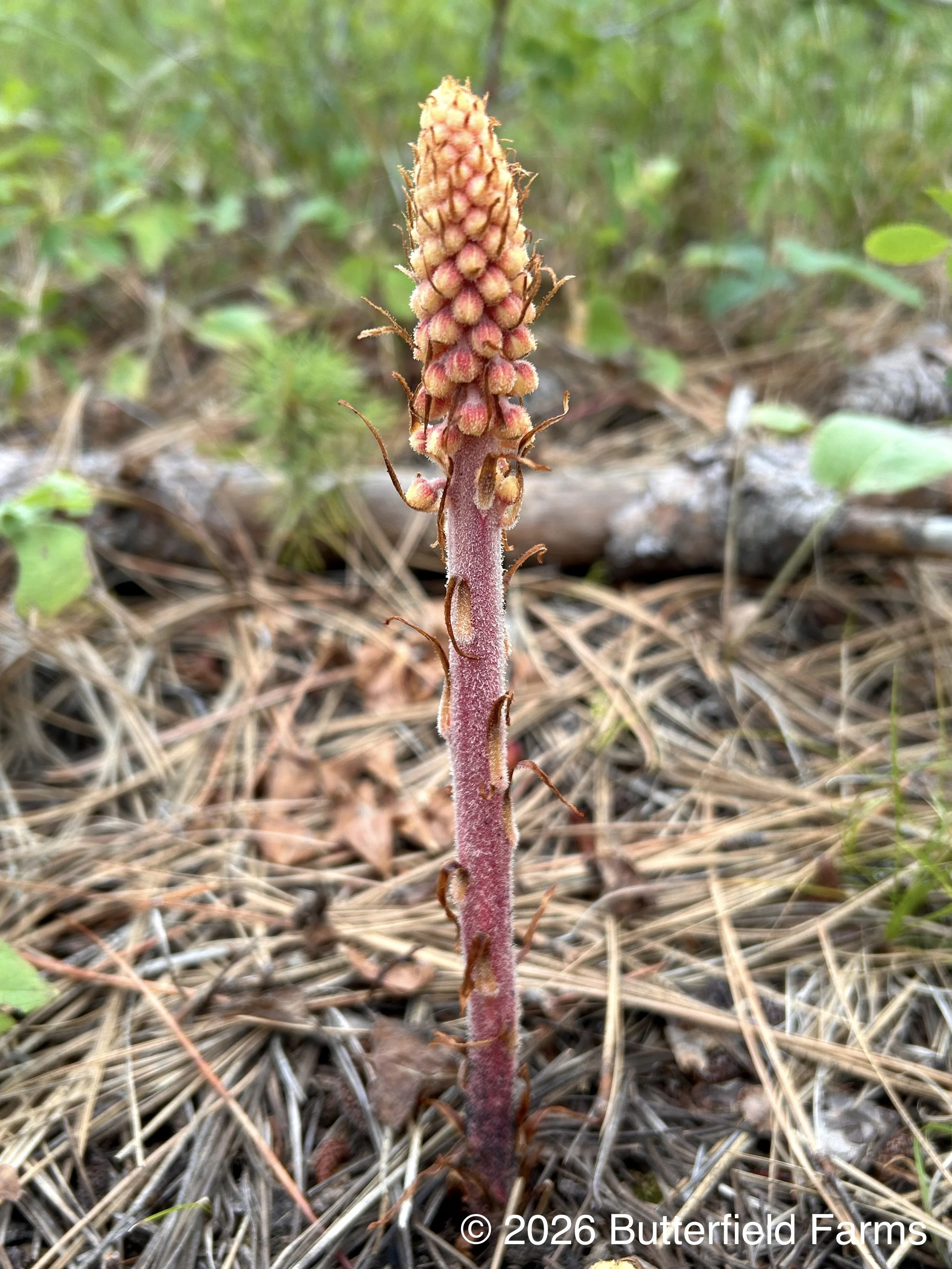 Image 2 of 2
Pterospora andromedea
(also known as Albany beechdrops, Woodland pinedrops, Giant bird’s nest)
zones 3-6
500+ seeds
The unique flowering stems of Pinedrops can be found towering over the forest floors June-August. They have no chlorophyll and cannot make their own food. Instead, Pinedrops rely on complex fungal relationships to obtain nutrients from nearby plants.
The stems grow singly or in clusters up to 3’ tall. They are yellowish-orange with a raceme of yellowish flowers that hang downward from the stem. Pinedrops have glandular hairs on their stems that exude a sticky liquid. Leaves are unremarkable, appearing simply as small bracts along the stem.
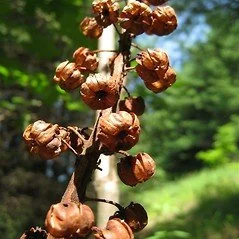
Dried flower stalks persist on the plant for a long time and are quite attractive, with the pendular seed pods resembling tiny pumpkins. They make a fabulous addition to dried floral arrangements.
Pinedrops are not orchids, but the seeds require similar treatment and so I offer the following notes on the seed:
A note on orchid seeds: Orchid seed falls into the category known as “dust seeds” because, well, the seeds look like dust. Orchid seeds are notoriously difficult to germinate. Be sure to do your research before attempting them.
The seed I sell here is available in limited quantities because I don’t always find orchids in seed. When I do, I hand gather carefully and selectively from mature plants catching as much of the seed as possible.
These seeds are hard to find in retail markets because the plants are rare and the seeds themselves are difficult to process. I offer them in good faith here to the orchid fans who wish to attempt growing orchids from seed. And I invite you to share your successes with me!
Pinedrops, like orchids, are notoriously difficult to grow outside of where they choose to appear. Seeds are tiny and slow to germinate. Growth requirements are highly selective and often depend on specific fungal relationships.
Should you accept the challenge, we recommend mixing the dusty contents of the seed packet with a small amount of sand or sawdust. Sprinkle the seed over an acidic, peaty soil in a promising location (shady and moist, preferably with decaying conifer wood) where the plants will not need to be moved. Germination and growth are slow, so be patient!
Pterospora andromedea
(also known as Albany beechdrops, Woodland pinedrops, Giant bird’s nest)
zones 3-6
500+ seeds
The unique flowering stems of Pinedrops can be found towering over the forest floors June-August. They have no chlorophyll and cannot make their own food. Instead, Pinedrops rely on complex fungal relationships to obtain nutrients from nearby plants.
The stems grow singly or in clusters up to 3’ tall. They are yellowish-orange with a raceme of yellowish flowers that hang downward from the stem. Pinedrops have glandular hairs on their stems that exude a sticky liquid. Leaves are unremarkable, appearing simply as small bracts along the stem.
Dried flower stalks persist on the plant for a long time and are quite attractive, with the pendular seed pods resembling tiny pumpkins. They make a fabulous addition to dried floral arrangements.
Pinedrops are not orchids, but the seeds require similar treatment and so I offer the following notes on the seed:
A note on orchid seeds: Orchid seed falls into the category known as “dust seeds” because, well, the seeds look like dust. Orchid seeds are notoriously difficult to germinate. Be sure to do your research before attempting them.
The seed I sell here is available in limited quantities because I don’t always find orchids in seed. When I do, I hand gather carefully and selectively from mature plants catching as much of the seed as possible.
These seeds are hard to find in retail markets because the plants are rare and the seeds themselves are difficult to process. I offer them in good faith here to the orchid fans who wish to attempt growing orchids from seed. And I invite you to share your successes with me!
Pinedrops, like orchids, are notoriously difficult to grow outside of where they choose to appear. Seeds are tiny and slow to germinate. Growth requirements are highly selective and often depend on specific fungal relationships.
Should you accept the challenge, we recommend mixing the dusty contents of the seed packet with a small amount of sand or sawdust. Sprinkle the seed over an acidic, peaty soil in a promising location (shady and moist, preferably with decaying conifer wood) where the plants will not need to be moved. Germination and growth are slow, so be patient!