 Image 1 of 2
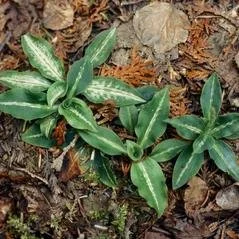 Image 2 of 2
Goodyera oblongifolia
(also known as Giant rattlesnake plantain, Menzies’ rattlesnake plantain, Western rattlesnake plantain)
zones 3-6
500+ seeds
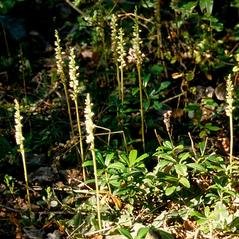
The most eye-catching part of Rattlesnake Plantain is it’s deep green basal leaves with a central white stripe. The leaves persist through winter and can be found growing on forest floors long after flowers have faded. The name “rattlesnake plantain” comes from the resemblance of the white leaf markings to those of a rattlesnake. The flowering stem is leafless and grows up to 16” tall and bears small, greenish-white flowers from July-August.
Rattlesnake Plantain is in the orchid family and prefers dry to moist, shady forest floors.
A note on orchid seeds: Orchid seed falls into the category known as “dust seeds” because, well, the seeds look like dust. Orchid seeds are notoriously difficult to germinate. Be sure to do your research before attempting them.
The seed I sell here is available in limited quantities because I don’t always find orchids in seed. When I do, I hand gather carefully and selectively from mature plants catching as much of the seed as possible.
These seeds are hard to find in retail markets because the plants are rare and the seeds themselves are difficult to process. I offer them in good faith here to the orchid fans who wish to attempt growing orchids from seed. And I invite you to share your successes with me!
Rattlesnake Plantain, like all orchids, is notoriously difficult to grow outside of where it chooses to appear. Seeds are tiny and slow to germinate. Growth requirements are highly selective and often depend on specific fungal relationships.
Should you accept the challenge, we recommend mixing the dusty contents of the seed packet with a small amount of sand or sawdust. Sprinkle the seed over an acidic, peaty soil in a promising location (shady and moist) where the plants will not need to be moved. Germination and growth are slow, so be patient!
Goodyera oblongifolia
(also known as Giant rattlesnake plantain, Menzies’ rattlesnake plantain, Western rattlesnake plantain)
zones 3-6
500+ seeds
The most eye-catching part of Rattlesnake Plantain is it’s deep green basal leaves with a central white stripe. The leaves persist through winter and can be found growing on forest floors long after flowers have faded. The name “rattlesnake plantain” comes from the resemblance of the white leaf markings to those of a rattlesnake. The flowering stem is leafless and grows up to 16” tall and bears small, greenish-white flowers from July-August.
Rattlesnake Plantain is in the orchid family and prefers dry to moist, shady forest floors.
A note on orchid seeds: Orchid seed falls into the category known as “dust seeds” because, well, the seeds look like dust. Orchid seeds are notoriously difficult to germinate. Be sure to do your research before attempting them.
The seed I sell here is available in limited quantities because I don’t always find orchids in seed. When I do, I hand gather carefully and selectively from mature plants catching as much of the seed as possible.
These seeds are hard to find in retail markets because the plants are rare and the seeds themselves are difficult to process. I offer them in good faith here to the orchid fans who wish to attempt growing orchids from seed. And I invite you to share your successes with me!
Rattlesnake Plantain, like all orchids, is notoriously difficult to grow outside of where it chooses to appear. Seeds are tiny and slow to germinate. Growth requirements are highly selective and often depend on specific fungal relationships.
Should you accept the challenge, we recommend mixing the dusty contents of the seed packet with a small amount of sand or sawdust. Sprinkle the seed over an acidic, peaty soil in a promising location (shady and moist) where the plants will not need to be moved. Germination and growth are slow, so be patient!