 Image 1 of 2
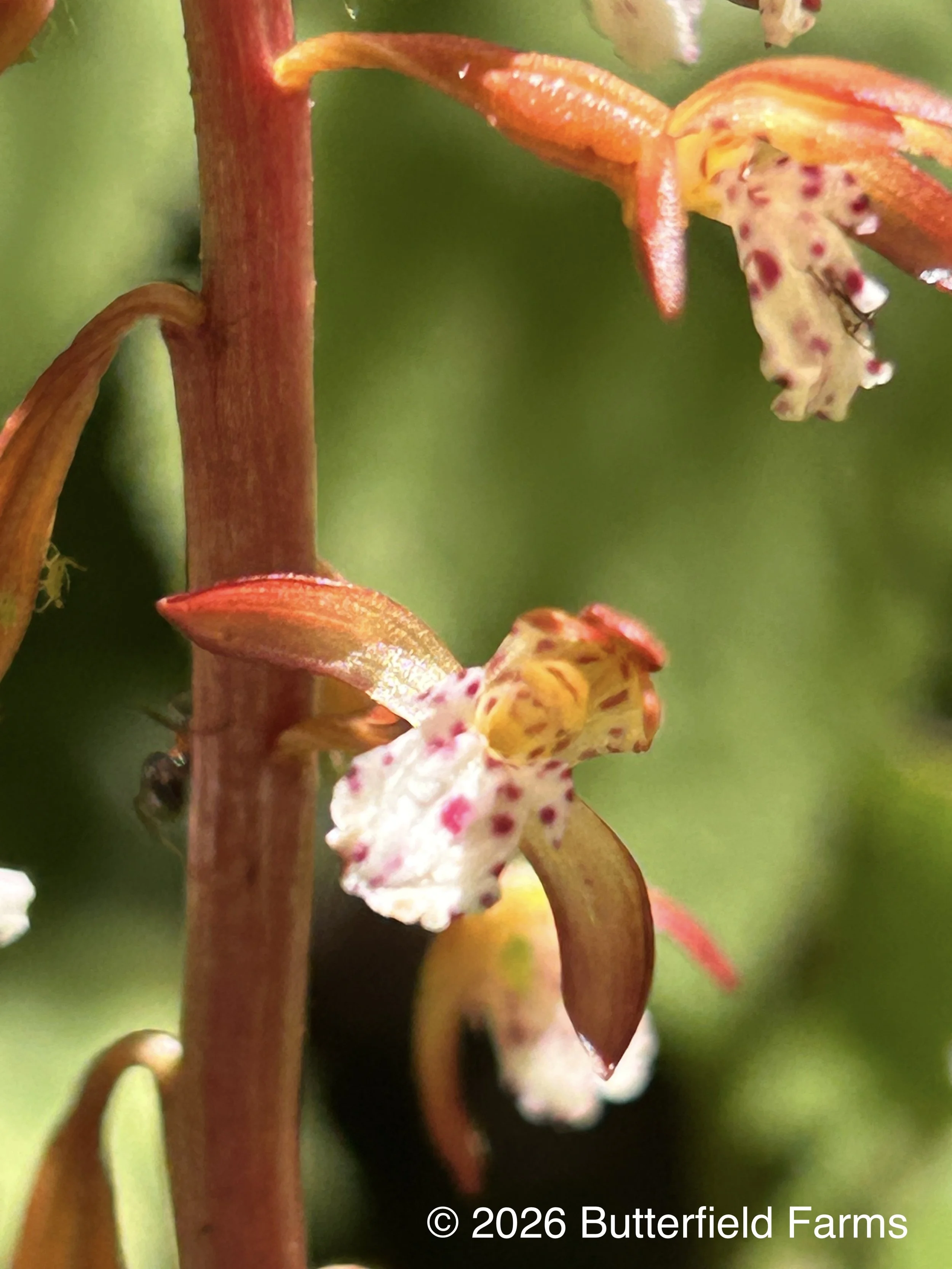 Image 2 of 2
Corallorhiza maculata
(also known as Mottled coralroot, Western spotted coralroot, Ozette coralroot, Coral-root)
zones 3-5
500+ seeds
If Idaho was looking for a flower capable of starring in its own horror film, it should look no further than Spotted Coralroot. This odd-looking plant will catch the eye of any hiker who will inevitably say, ‘“What is THAT??”
This member of the orchid family contains no chlorophyll and is thus unable to photosynthesize like other plants. Spotted Coralroot relies on a specific parasitic fungus to attack it, and then parasitizes the parasite, using it to obtain food and nutrients.
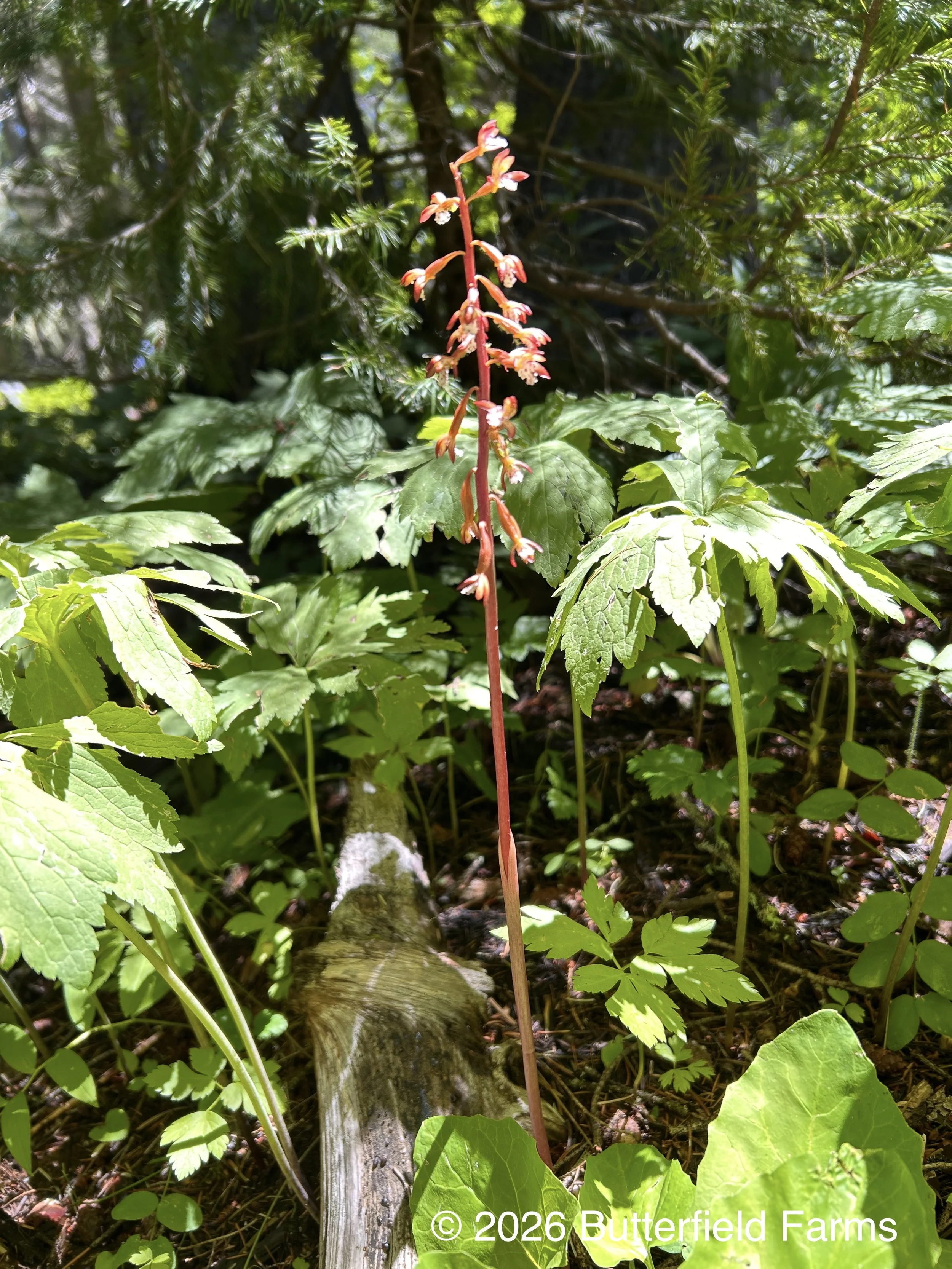
Plants are reddish-purple to brownish in color and produce a 8-12” raceme of 10-30 small flowers. Flowers are difficult to see due to their size, but are white with dark red spots. They can be found blooming in shady forests from June-July.
A note on orchid seeds: Orchid seed falls into the category known as “dust seeds” because, well, the seeds look like dust. Orchid seeds are notoriously difficult to germinate. Be sure to do your research before attempting them.
The seed I sell here is available in limited quantities because I don’t always find orchids in seed. When I do, I hand gather carefully and selectively catching as much of the seed as possible.
These seeds are hard to find in retail markets because the plants are rare and the seeds themselves are difficult to process. I offer them in good faith here to the orchid fans who wish to attempt growing orchids from seed. And I invite you to share your successes with me!
Spotted Coralroot, like all orchids, is notoriously difficult to grow outside of where it chooses to appear. Seeds are tiny and slow to germinate. Growth requirements are highly selective and often depend on specific fungal relationships.
Should you accept the challenge, we recommend mixing the contents of the seed packet with a small amount of sand or sawdust. Sprinkle the seed over an acidic, peaty soil in a promising location (shady, with lots of decomposing wood—especially spruce or pine) where the plants will not need to be moved. Germination and growth are slow, so be patient!
Corallorhiza maculata
(also known as Mottled coralroot, Western spotted coralroot, Ozette coralroot, Coral-root)
zones 3-5
500+ seeds
If Idaho was looking for a flower capable of starring in its own horror film, it should look no further than Spotted Coralroot. This odd-looking plant will catch the eye of any hiker who will inevitably say, ‘“What is THAT??”
This member of the orchid family contains no chlorophyll and is thus unable to photosynthesize like other plants. Spotted Coralroot relies on a specific parasitic fungus to attack it, and then parasitizes the parasite, using it to obtain food and nutrients.
Plants are reddish-purple to brownish in color and produce a 8-12” raceme of 10-30 small flowers. Flowers are difficult to see due to their size, but are white with dark red spots. They can be found blooming in shady forests from June-July.
A note on orchid seeds: Orchid seed falls into the category known as “dust seeds” because, well, the seeds look like dust. Orchid seeds are notoriously difficult to germinate. Be sure to do your research before attempting them.
The seed I sell here is available in limited quantities because I don’t always find orchids in seed. When I do, I hand gather carefully and selectively catching as much of the seed as possible.
These seeds are hard to find in retail markets because the plants are rare and the seeds themselves are difficult to process. I offer them in good faith here to the orchid fans who wish to attempt growing orchids from seed. And I invite you to share your successes with me!
Spotted Coralroot, like all orchids, is notoriously difficult to grow outside of where it chooses to appear. Seeds are tiny and slow to germinate. Growth requirements are highly selective and often depend on specific fungal relationships.
Should you accept the challenge, we recommend mixing the contents of the seed packet with a small amount of sand or sawdust. Sprinkle the seed over an acidic, peaty soil in a promising location (shady, with lots of decomposing wood—especially spruce or pine) where the plants will not need to be moved. Germination and growth are slow, so be patient!