 Image 1 of 1
Maianthemum stellatum
(also known as Star-flowered / Western Solomon’s plume, Wild / False lily of the valley, Little false Solomon’s seal,
zones 3-7
20 seeds
This widely distributed native plant grows in all states and provinces of North America except for Texas. As with other plants with such a broad distribution, the Starry False Solomon’s Seal goes by many common names. In Idaho, it is generally found at elevations above 4500’ in moist or shady areas. It produces a purple to black-colored berry which are edible, but not especially tasty.
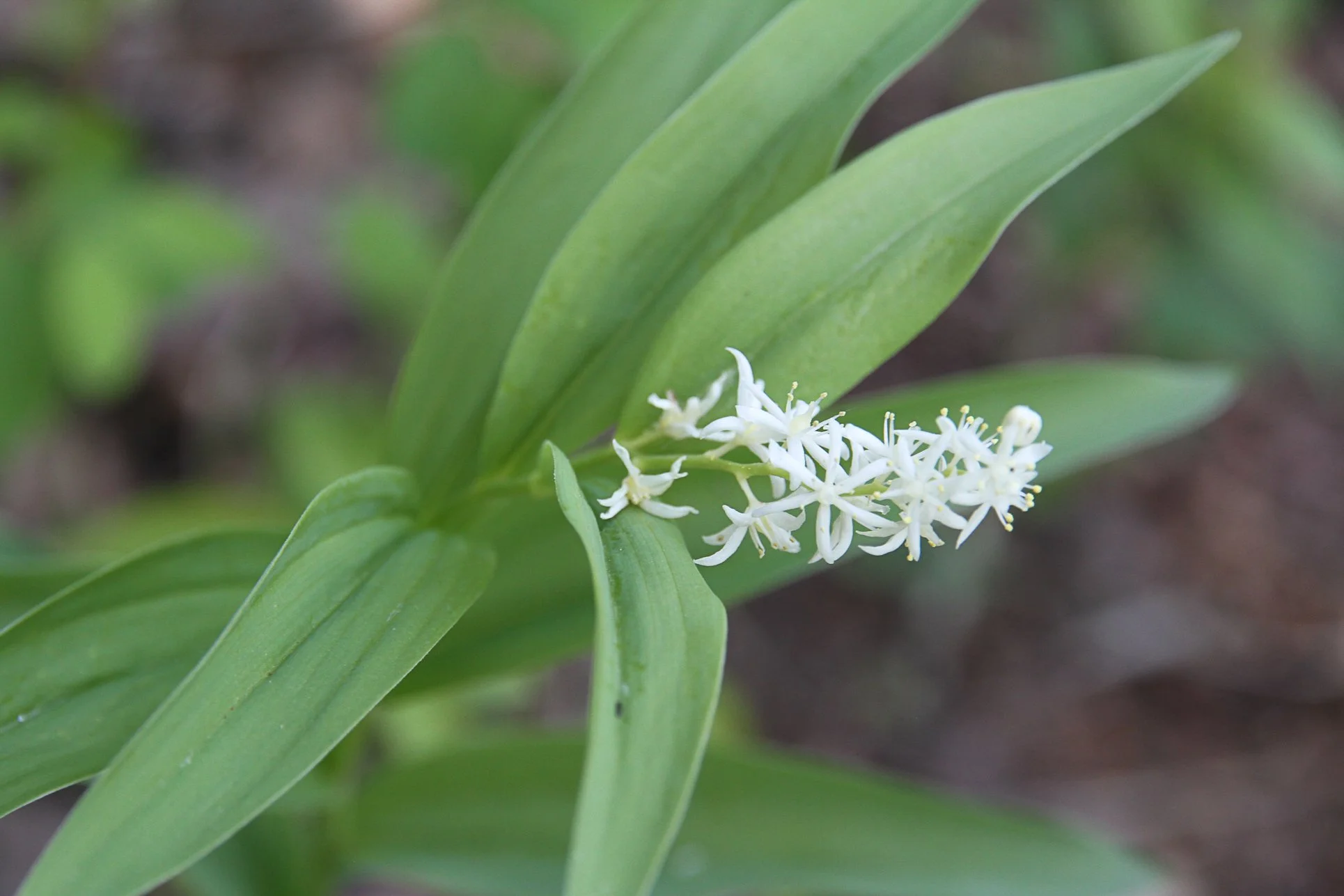
Starry False Solomon Seal is smaller and somewhat daintier than its cousins, generally not reaching over 10” tall. Its unbranched, leafy stems bear terminal, few-flowered clusters of star-shaped white blossoms. Since each stalk comes from underground, horizontal stems, a single plant can eventually produce many dozens of aboveground plants.
Very easy to grow, but does require some time. Easiest to start outdoors in fall; requires two winter seasons for germination (a cold, moist period; followed by a warm, moist period; followed by a second cold, moist period). Sow in place in prepared soil in fall. Keep the ground moist and weeded throughout germination, and expect emergence in the second spring after sowing.
Maianthemum stellatum
(also known as Star-flowered / Western Solomon’s plume, Wild / False lily of the valley, Little false Solomon’s seal,
zones 3-7
20 seeds
This widely distributed native plant grows in all states and provinces of North America except for Texas. As with other plants with such a broad distribution, the Starry False Solomon’s Seal goes by many common names. In Idaho, it is generally found at elevations above 4500’ in moist or shady areas. It produces a purple to black-colored berry which are edible, but not especially tasty.
Starry False Solomon Seal is smaller and somewhat daintier than its cousins, generally not reaching over 10” tall. Its unbranched, leafy stems bear terminal, few-flowered clusters of star-shaped white blossoms. Since each stalk comes from underground, horizontal stems, a single plant can eventually produce many dozens of aboveground plants.
Very easy to grow, but does require some time. Easiest to start outdoors in fall; requires two winter seasons for germination (a cold, moist period; followed by a warm, moist period; followed by a second cold, moist period). Sow in place in prepared soil in fall. Keep the ground moist and weeded throughout germination, and expect emergence in the second spring after sowing.