 Image 1 of 3
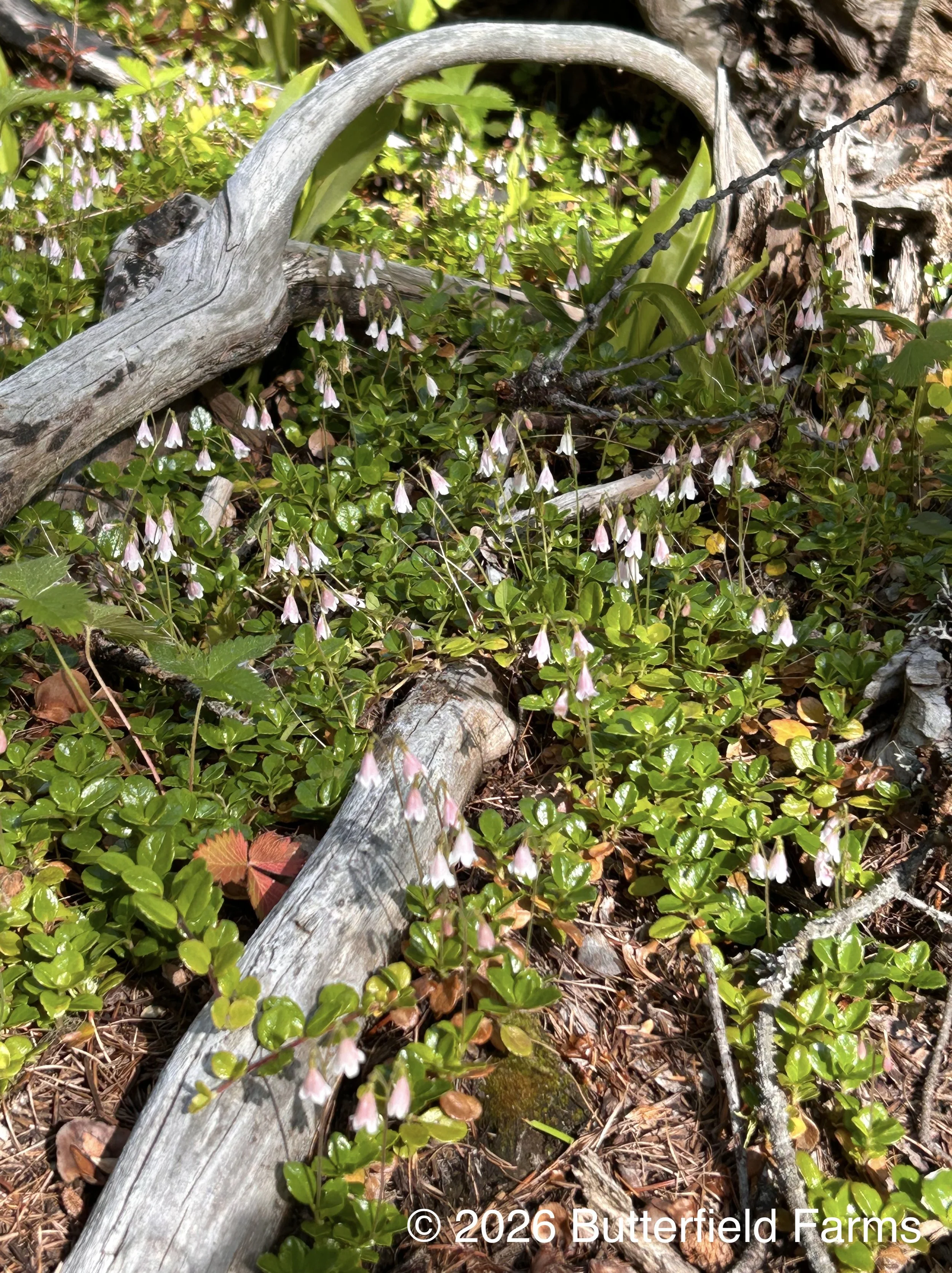 Image 2 of 3
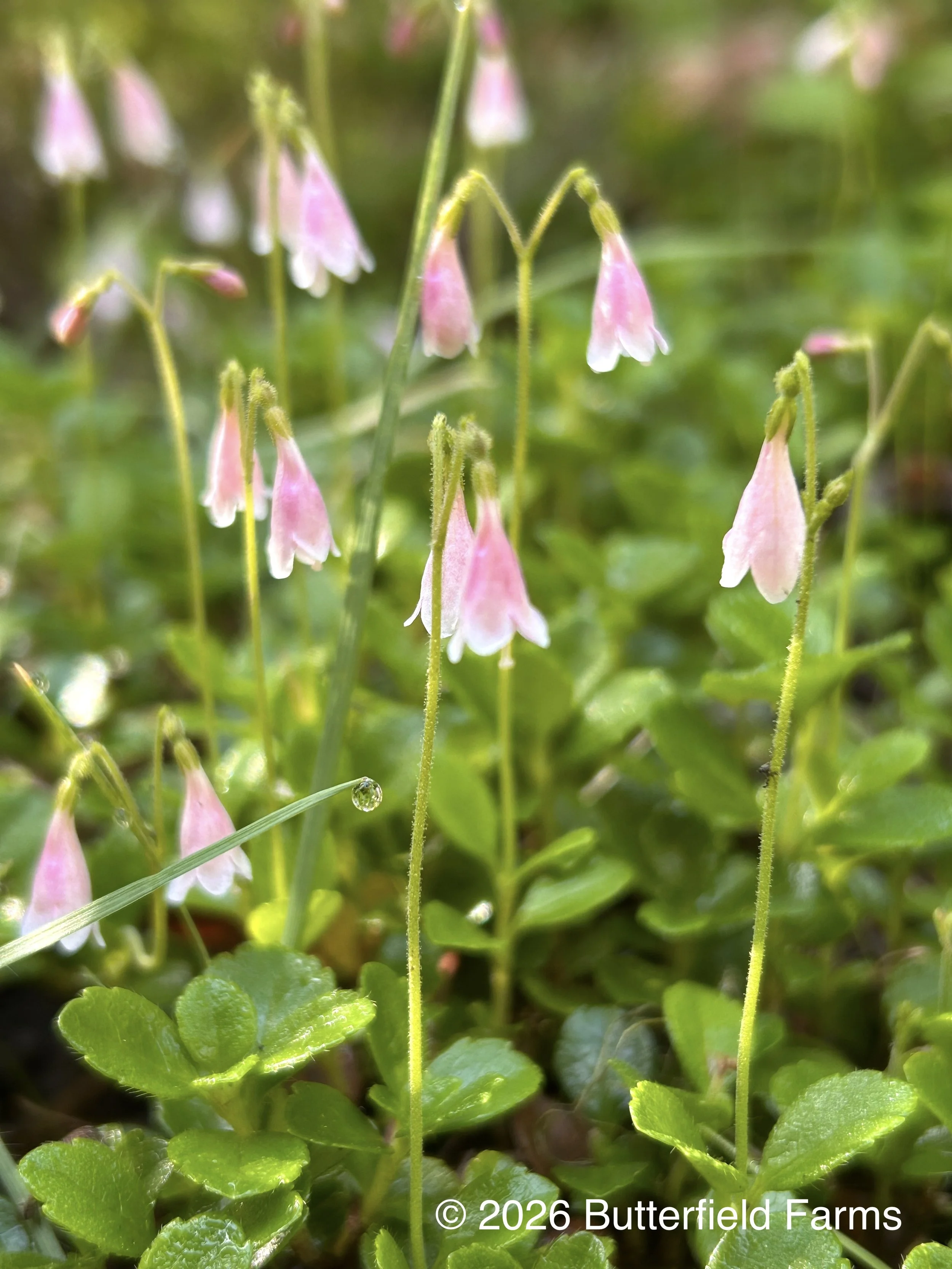 Image 3 of 3
Linnaea borealis
(also known as Twin flower)
zones 3-7
10 seeds
Twinflower is a highly sought-after ornamental for the native garden. Noted botanist, C.L. Hitchcock called it “one of our most desirable native ground-covering shrubs”. This darling of the woodland creeps along the forest floors. It is utterly charming in bloom, and retains its value as a lush groundcover when blooms are absent.
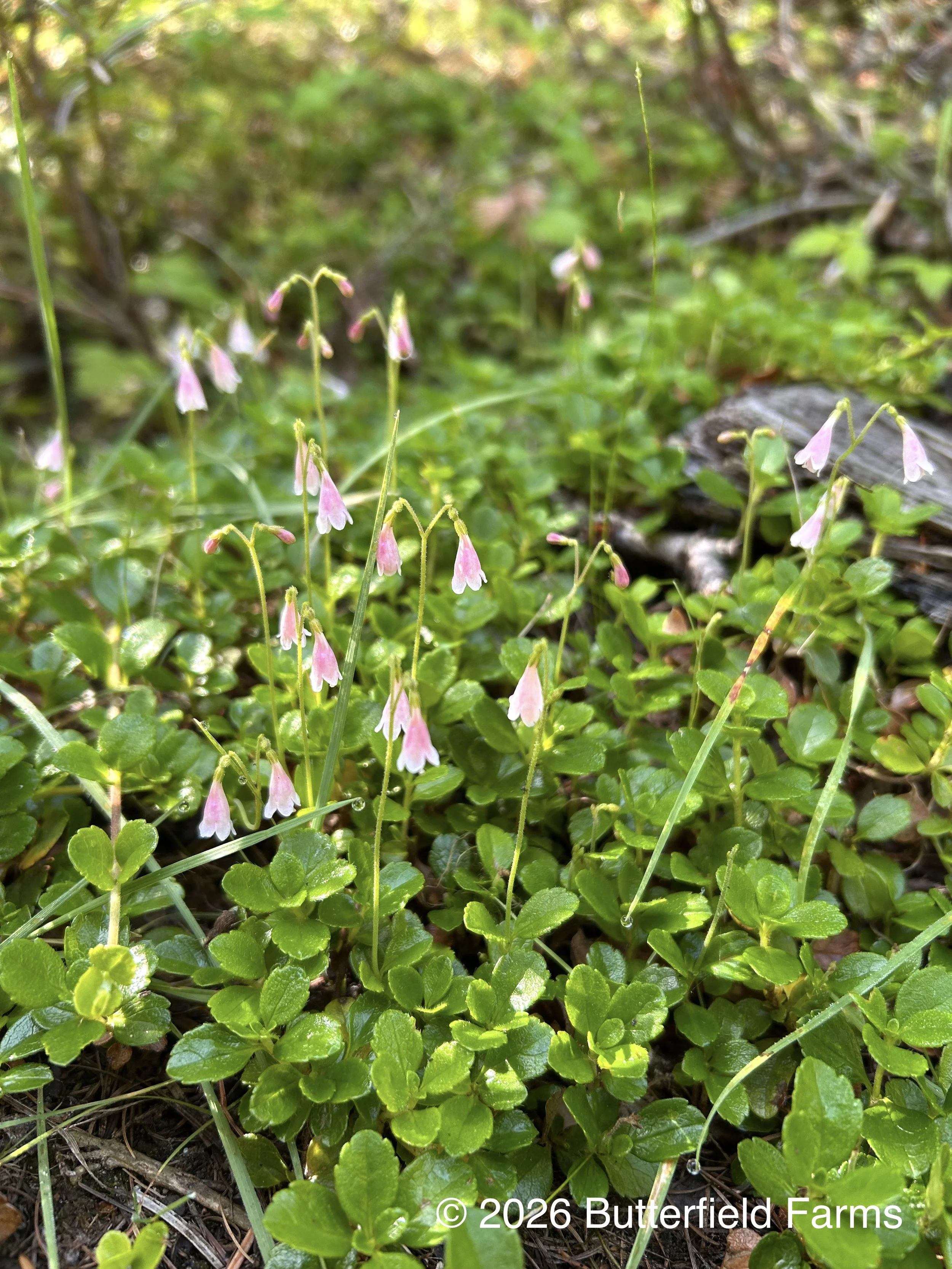
Dainty, paired blooms hover like bells over a carpet of tiny evergreen leaves. Mats can cover many square feet of forest floor and appear in many different habitats throughout the Rocky Mountain region. Twinflower has a preference for part sun, and rich, moist soil.
Twinflower seed is something of a novelty, hence the small quantity in our packets. Cross-pollination between two or more plants is required to set viable seed, and the seed itself is covered in sticky, glandular hairs that easily attach to passing wildlife. These factors, plus the difficulty of harvesting sticky seeds on hands and knees make Twinflower one of the most precious seeds in our catalog.
Seed requires cold stratification for 60 days. Surface sow indoors (seed requires sunlight to germinate) and keep moist. Overwintering indoors is recommended for the first winter, then plant out the following spring. Once established, Twinflower spreads easily (but not aggressively) by underground roots and stolons.
Linnaea borealis
(also known as Twin flower)
zones 3-7
10 seeds
Twinflower is a highly sought-after ornamental for the native garden. Noted botanist, C.L. Hitchcock called it “one of our most desirable native ground-covering shrubs”. This darling of the woodland creeps along the forest floors. It is utterly charming in bloom, and retains its value as a lush groundcover when blooms are absent.
Dainty, paired blooms hover like bells over a carpet of tiny evergreen leaves. Mats can cover many square feet of forest floor and appear in many different habitats throughout the Rocky Mountain region. Twinflower has a preference for part sun, and rich, moist soil.
Twinflower seed is something of a novelty, hence the small quantity in our packets. Cross-pollination between two or more plants is required to set viable seed, and the seed itself is covered in sticky, glandular hairs that easily attach to passing wildlife. These factors, plus the difficulty of harvesting sticky seeds on hands and knees make Twinflower one of the most precious seeds in our catalog.
Seed requires cold stratification for 60 days. Surface sow indoors (seed requires sunlight to germinate) and keep moist. Overwintering indoors is recommended for the first winter, then plant out the following spring. Once established, Twinflower spreads easily (but not aggressively) by underground roots and stolons.